III. Breath of Life: Empathy-Driven Hard Tech
Breath of Life: Empathy-Driven Hard Tech
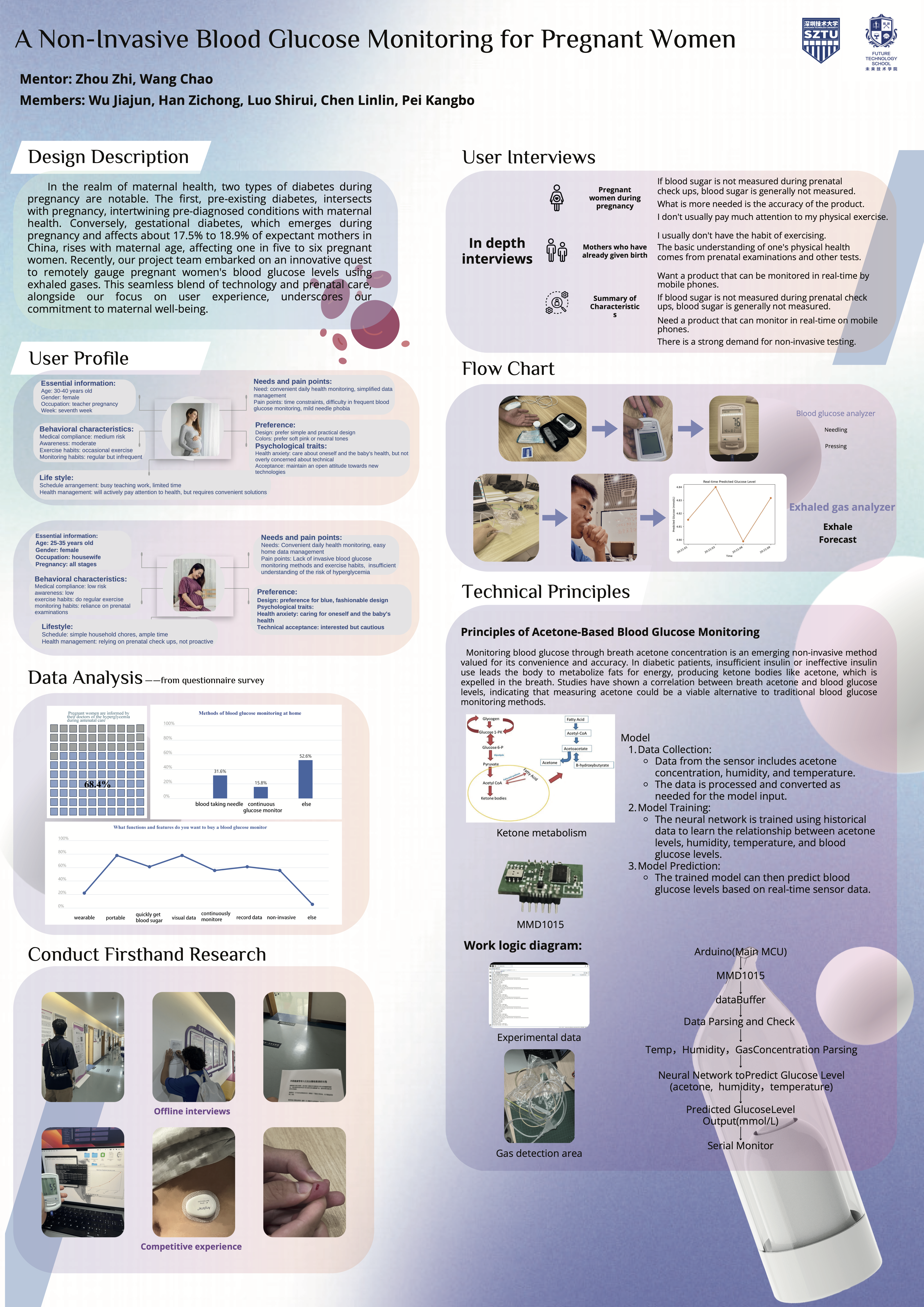
Phase III: 2024 - Application & Productization
The final phase of the Photonic Nose project wasn’t driven by a new equation or a better game engine. It was driven by a conversation.
I spoke with a friend who had suffered from Gestational Diabetes Mellitus (GDM). She described the daily ritual of pricking her finger for blood tests—the pain, the callous on her fingertips, but mostly, the anxiety. Every drop of blood was a reminder of potential harm to her unborn child.
“I just want to know I’m okay,” she said. “Without bleeding for it.”
That was the spark. I realized my “Photonic Nose” could do more than smell battery fires. It could smell Acetone.
The Biology of Breath
It turns out, our breath tells a story. When the body can’t use glucose properly, it burns fat, producing ketones. One of these, acetone, is exhaled in our breath.
- High Blood Glucose $\approx$ High Breath Acetone
The correlation is there. The challenge was sensitivity. We needed to detect concentrations as low as 0.1 ppm (parts per million). This is like finding a single specific drop of water in a swimming pool.
Designing for Empathy
We built the prototype around the MMD1015 sensor, but the engineering was only half the battle. The other half was psychology.
I utilized Empathy Mapping to deconstruct the user’s emotional journey.
- Fear: “Will this hurt? Is my baby okay?”
- Frustration: “The numbers are confusing.”
- Need: Reassurance, Simplicity, Warmth.
We ditched the industrial “black box” aesthetic. We looked at objects that signify care and comfort: a warm water bottle, a smooth pebble, an inhaler.
The final design is soft, rounded, and warm. No sharp edges. No clinical white plastic. It fits in the palm like a worry stone.
The Neural Network Backend
To make it work, I couldn’t rely on simple linear regression. Breath is messy—humidity, temperature, and other gases interfere with the signal.
I trained a lightweight Neural Network to clean the data.
- Inputs: Acetone voltage, Temp, Humidity, User BMI, Gestational Week.
- Hidden Layers: 3 dense layers with ReLU activation.
- Output: Predicted Glucose Level (mg/dL).
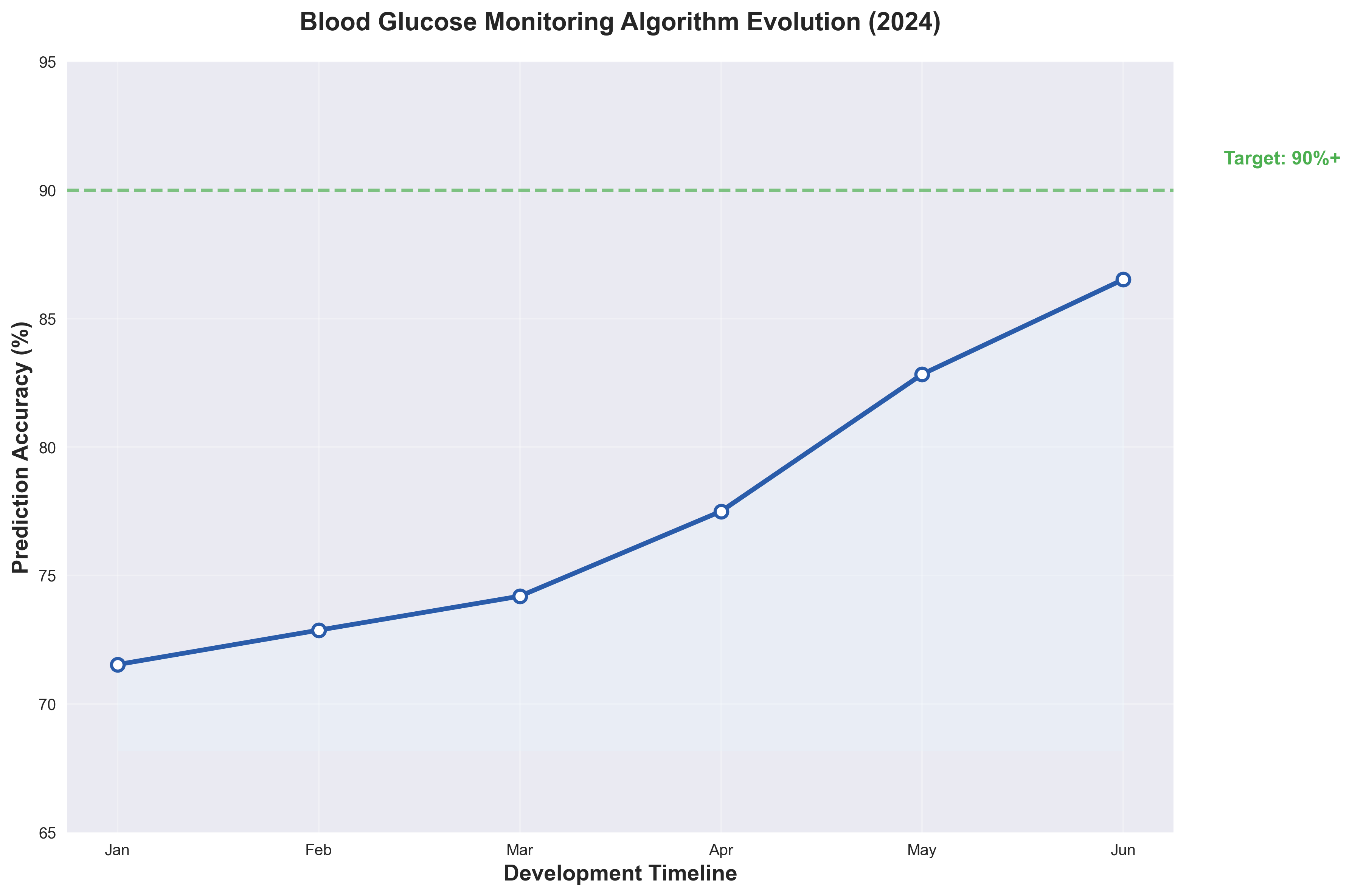
The results were promising. Our prototype achieved a response time of under 10 seconds. Compare that to the minutes of preparation, pricking, and waiting for a blood test strip.
From Hacker to Healer
Looking back at these three years—from the cold physics of 2022 to the empathy-driven design of 2024—I see a transformation in myself.
I started as a “Geek,” obsessed with lasers and code. I became a “Designer,” obsessed with form and experience. But ultimately, this project taught me that technology finds its highest purpose not in complexity, but in compassion.
The Photonic Nose isn’t just a sensor anymore. It’s a promise that the future of healthcare can be gentle, invisible, and profoundly human.
“Technology is best when it brings people together.” — Matt Mullenweg
For me, technology is best when it removes the barriers between us and our own well-being.